Boston Community Hub Schools
Our Communities, Our Schools, Our Voices
WHAT ARE COMMUNITY HUB SCHOOLS?
Boston Community Hub Schools is a long-term strategy to actively engage the resources of each community around student and family success. In a Boston Community Hub School, the school community intentionally looks at its assets (the great things that are happening) and opportunities (the things they want to improve) to take action to make their school-community the best it can be. Along with Career and Technical Education and STEM, the Community Hub School strategy has been identified as vital to the education of Boston’s children, and to the future of Boston as a whole.
With the support of a dedicated Hub School Coordinator, each school-community —students, families, educators, and local partners — invests in the six key practices of community schools:
Rigorous, community-connected classroom instruction
Teaching and learning in the school integrates high-quality instruction with rigorous content and real-world relevance that reflects students’ experiences, identities, the local community, and the world. The curriculum is standards-based and supports students to engage in meaningful inquiry-based learning and problem-solving.
Powerful student and family engagement
Families and students actively participate in the school’s decision-making. They are partners in setting goals and shaping the school’s culture, policies, and programs through strong partnerships. Schools become hubs providing opportunities for adults and young people.
Expanded and enriched learning opportunities
Before- and after-school, weekend, summer, and extended-day programs provide expanded time and enriched learning experiences. These opportunities are aligned with classroom instruction, connect to enrichment and cultural activities, and individualized support.
Culture of belonging, safety, and care
School staff work with students, families, and peers to foster a safe and welcoming place. Each person in the school community finds value in a rich diversity of experiences and feels encouraged to share their own views, knowledge, and culture.
Integrated systems of support
To foster well-being and a healthy learning environment, a dedicated team of school staff and community partners employ a systematic, data-based approach to services, supports, and opportunities.
Collaborative leadership, shared power and voice
Families, students, teachers, principals, and community partners co-lead work and professional learning. They share data and make decisions together through formal structures and through more informal engagement.
In Boston, we are centering our implementation around the Community Schools Forward framework developed by the Brookings Institute, National Center for Community Schools, Coalition for Community Schools, and IEL. This model builds on the four pillars of community schools and adds a direct connection to academic learning and SEL, two priority areas for BPS.
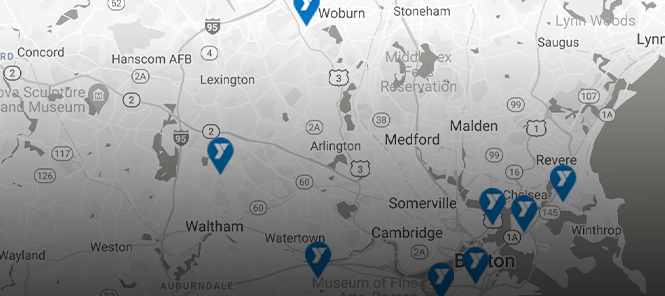
Locations
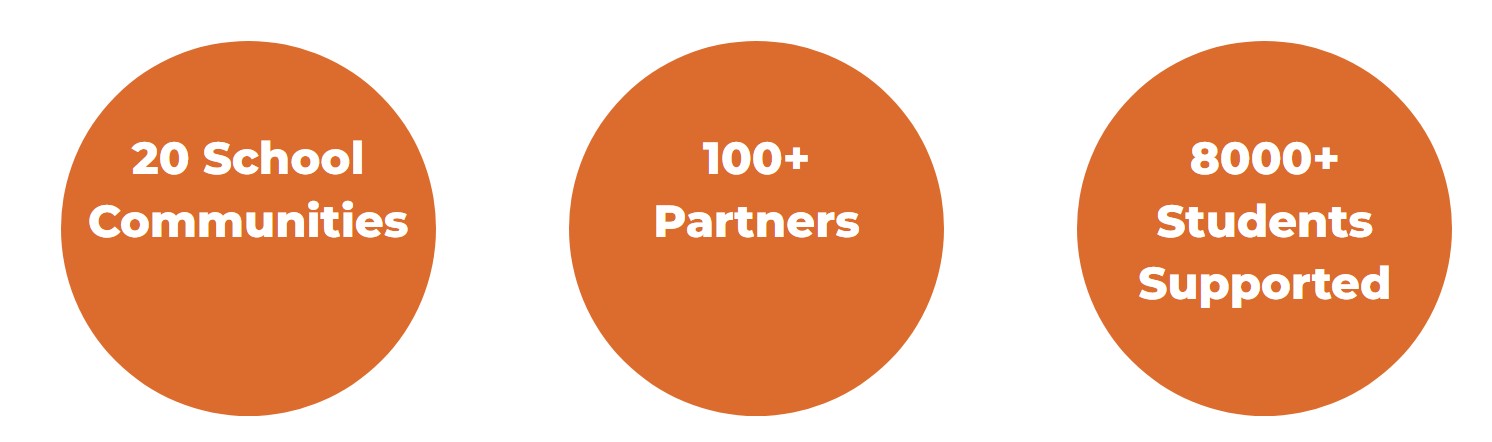
Twenty Boston Public Schools across the City—representing all grade levels and a variety of communities—are Community Hub Schools as of the 2024–2025 school year.
Boston Community Hub Schools is guided by a collaborative of key local organizations:
Contact
For more information on how you or your organization can get involved with Community Schools, please contact:
Joanne Gomes
Senior Director of Boston Community Hub Schools
JGomes@ymcaboston.org
Claire Kaiser
Senior Director of Academic Integration and Partner Development
CKaiser@ymcaboston.org
Or complete the form below: